
Most of what gets written about shilajit online is either brand marketing or recycled listicles. This page does the opposite. It sets out what the chemistry actually establishes, what the human studies genuinely show, and where the popular claims run ahead of the evidence. Every claim below is graded and linked to a primary source, so you can check the original rather than take our word for it.
Educational content, not medical advice. Nothing here diagnoses, treats, or prevents any condition. Talk to your doctor before starting shilajit or any supplement, especially if you are pregnant or breastfeeding, take medication, or have a health condition. See our safety and side effects guidance.
What shilajit actually is
Shilajit (also called mumijo, moomiyo, or mumie) is a tar-like material that seeps from cracks in high mountain rock, mainly across the Himalaya, Altai, and Caucasus ranges. It is best understood not as a mineral or a herb but as a humic substance: the compressed end-product of centuries of plant and microbial decomposition, trapped in rock and slowly forced out by heat.
Shilajit is a humic material formed over centuries by the microbial decomposition of plant matter compressed in mountain rock, with humic substances making up roughly 60 to 80 percent of the total. [Carrasco-Gallardo 2012] Moderate evidence
Two fractions do the work that researchers care about. Fulvic acid is a small, water-soluble humic molecule that acts as a carrier and antioxidant. Dibenzo-alpha-pyrones (DBPs) and their chromoprotein complexes are the compounds most consistently singled out as shilajit’s characteristic actives. A standardised product is defined by guaranteed levels of these, which is why “raw resin off the mountain” tells you very little about what you are actually taking.
The compounds most consistently identified as shilajit's characteristic actives are dibenzo-alpha-pyrones, DBP-chromoproteins, and fulvic acid. [Stohs 2014] Strong evidence
The “84 minerals” claim, checked against the lab
Almost every brand repeats that shilajit contains “84 minerals.” When a native Himalayan sample was put through modern elemental analysis, the labs detected on the order of sixteen elements, dominated by potassium, calcium, magnesium, and sodium. The mineral load is real but modest, and the “84” figure is a marketing convention rather than a measured count. Honest framing: shilajit carries a variable spread of trace elements, not a guaranteed 84.
Direct chemical analysis of native Himalayan shilajit detected roughly 16 elements across combined methods, contradicting the popular 84-minerals figure. [Basavaraja 2025, ACS Omega] Moderate evidence
What the evidence does and does not show
The chemistry of shilajit is reasonably well characterised. The health evidence is much thinner than marketing implies: a small number of small human trials, several using the same manufacturer-supplied standardised material, and rarely replicated by independent labs. Here is the honest state of play on the claims people search for most.
In men aged 45 to 55, purified shilajit 250 mg twice daily for 90 days significantly raised total and free testosterone versus placebo, but this rests on a single small, manufacturer-linked trial with no published effect sizes and no independent replication. [Pandit 2016, Andrologia] Preliminary evidence
An independent placebo-controlled trial found that 500 mg per day for 8 weeks helped active men retain muscular strength under fatigue and lowered a connective-tissue breakdown marker, a recovery signal rather than a raw strength gain. [Keller 2019, JISSN] Moderate evidence
Fulvic acid shows antioxidant, anti-inflammatory, and mitochondrial effects, but almost entirely in test-tube and animal work; the one human trial often cited was topical fulvic-acid cream for eczema, not oral shilajit. [Winkler & Ghosh 2018] Preliminary evidence
The pattern is consistent: mechanistically interesting, clinically under-proven. That is not a reason to dismiss shilajit, but it is a reason to treat “clinically proven” and “natural TRT” headlines with suspicion.
The research index
The human and analytical studies that the honest claims actually rest on. We link each to its PubMed or PubMed Central record so you can read the original.
| Study | Design | What it found | Source |
|---|---|---|---|
| Pandit 2016, Andrologia | Human RCT, double-blind | Testosterone rise in middle-aged men (single study) | PMID 26395129 |
| Biswas 2010, Andrologia | Human, open-label, uncontrolled | Improved sperm count and quality in subfertile men | PMID 20078516 |
| Keller 2019, JISSN | Human RCT, double-blind (n=63) | Retained strength under fatigue; lower hydroxyproline | PMID 30728074 |
| Das 2016, J Med Food | Human, n=16, no placebo | Upregulated muscle collagen and matrix genes | PMID 27414521 |
| Stohs 2014, Phytother Res | Safety and pharmacology review | Actives are DBPs and fulvic acid; contamination risk in raw material | PMID 23733436 |
| Kamgar 2025, BMC Chemistry | Analytical (13 crude + 5 supplements) | Thallium in raw and finished products; some supplements higher than crude | PMID 39827344 |
| Basavaraja 2025, ACS Omega | Analytical (single native sample) | ~16 elements detected; regulated heavy metals below limits in that sample | PMID 41404054 |
| Carrasco-Gallardo 2012, Int J Alzheimers Dis | Composition and procognitive review | Fulvic acid tau-aggregation interest (in vitro only) | PMC3296184 |
How we evaluate the research
We grade every health claim on this site by the strength of the evidence behind it, and we show that grade next to the claim:
- Strong: multiple consistent human randomised trials, or robust analytical chemistry.
- Moderate: one good human trial, or consistent analytical data, with caveats.
- Preliminary: a single small human study, or animal and test-tube work only.
- Insufficient: widely asserted but not backed by quality evidence, often marketing.
We rank a peer-reviewed randomised controlled trial above a review, a review above an animal study, and an animal study above a brand claim. Where a study was funded by or linked to the product maker, we say so. Where the only evidence is a test tube or a rat, we say that too.
The one thing worth acting on today
If you take nothing else from this page: the best-documented fact about shilajit is a safety one. Because the raw material concentrates whatever sits in its host rock, unpurified shilajit can carry lead, arsenic, and thallium, and a 2025 analysis found some finished supplements contained more thallium than the crude source. A “purified” label is not a guarantee. The single most important buying decision is a recent third-party heavy-metal test, including thallium, not a health claim on the jar.
Thallium, a highly toxic metal, was measurable in both raw shilajit and finished supplements, and some supplements contained more thallium than the crude material. [Kamgar 2025, BMC Chemistry] Moderate evidence
The science section
Deeper explainers on what shilajit is made of, what the individual compounds do, and where the safety questions really lie.
-
The truth about shilajit’s 84 minerals (and what it’s really made of)
The famous 84 minerals figure is a marketing convention, and direct chemical analysis of shilajit tells a more modest and more honest story.
-
Does shilajit actually work? An honest look at the evidence
Shilajit has a little real human evidence and a lot of marketing, so whether it works depends heavily on what you expect it to do.
-
Is shilajit good for your kidneys? What the evidence actually says
The kidney benefit story rests on animal studies of drug-induced injury, while the better-documented kidney issue with shilajit is contamination.
-
Fulvic acid in shilajit: what it is and what it actually does
What fulvic acid is, the mechanisms researchers study, and why the human evidence is far thinner than supplement marketing suggests.
-
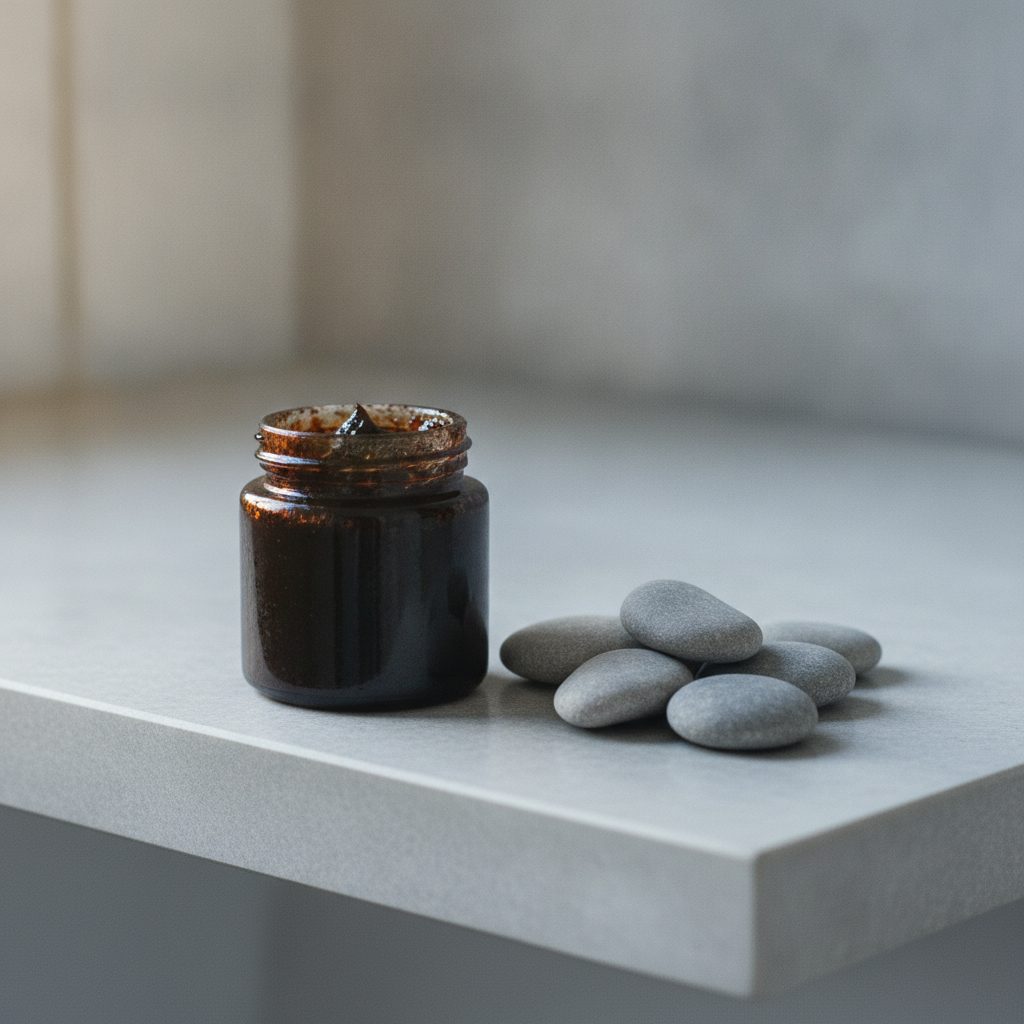
Heavy metals in shilajit: the contamination risk brands don’t advertise
The best-documented safety issue with shilajit is heavy-metal contamination of raw resin, and why a purified label does not ensure a clean product.
-

Shilajit side effects, safety, and who should avoid it
What the evidence shows about shilajit side effects, drug interactions, and the groups who should avoid it or seek medical supervision.
-

What is shilajit? A plain-English guide to the mountain resin
A plain guide to what shilajit is, how it forms, what is really in it, and which popular claims the chemistry does not support.
Keep reading
- Shilajit benefits: what the research actually shows
- How to take shilajit: dosage, timing, and method
- How to buy real shilajit: purity, sourcing, and price
- Shilajit FAQ: your questions answered
Reminder: this is educational content, not medical advice. Shilajit is not a treatment for any diagnosed condition. Speak to a qualified clinician before starting it, particularly if you are pregnant or breastfeeding, take prescription medication, or manage a chronic condition.
References
- Stohs SJ. Safety and efficacy of shilajit. Phytother Res. 2014;28(4):475-9. PMID 23733436
- Carrasco-Gallardo C, et al. Shilajit: a natural phytocomplex with potential procognitive activity. Int J Alzheimers Dis. 2012;2012:674142. PMC3296184
- Pandit S, et al. Clinical evaluation of purified shilajit on testosterone levels in healthy volunteers. Andrologia. 2016;48(5):570-5. PMID 26395129
- Biswas TK, et al. Clinical evaluation of spermatogenic activity of processed shilajit in oligospermia. Andrologia. 2010;42(1):48-56. PMID 20078516
- Keller JL, et al. The effects of shilajit supplementation on fatigue-induced decreases in muscular strength. J Int Soc Sports Nutr. 2019;16(1):3. PMID 30728074
- Das A, et al. The human skeletal muscle transcriptome in response to oral shilajit supplementation. J Med Food. 2016;19(7):701-9. PMID 27414521
- Kamgar E, et al. Quantifying thallium in shilajit and its supplements. BMC Chemistry. 2025. PMID 39827344
- Basavaraja D, et al. Chemical analysis of native Himalayan shilajit. ACS Omega. 2025;10(47):57097-106. PMID 41404054