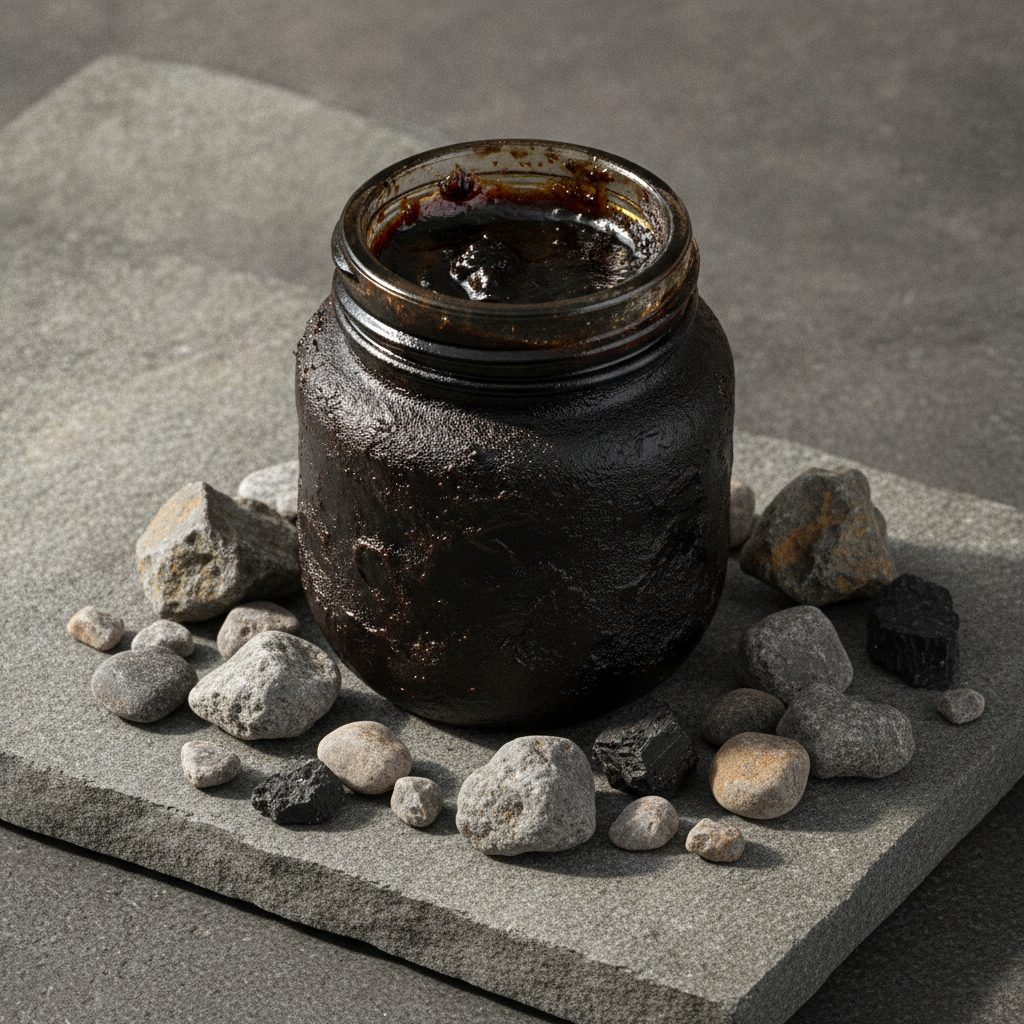
Almost every shilajit label repeats the same figure: 84 minerals, sometimes 85. It is printed like a fact, but it is worth asking where the number comes from and whether chemistry backs it up. When you actually read the analytical studies of what shilajit is made of, a more modest and more honest picture appears. This page explains what shilajit really contains, where the 84 minerals claim came from, and why the number matters less than the two things that actually define the material.
Educational content, not medical advice. Talk to a qualified clinician before taking shilajit, especially if you are pregnant or breastfeeding, take medication, or have a health condition.
What shilajit is actually made of
Shilajit is best understood as a humic material, which is the end product of centuries of plant and microbial matter breaking down and becoming trapped in mountain rock. By mass, the largest fraction is not minerals at all. Humic substances, the organic material formed by that slow decomposition, make up roughly 60 to 80 percent of the total. The mineral content is a real but minority part of the material, on the order of 20 to 40 percent depending on the source.
Shilajit is chiefly a humic material, with humic substances such as fulvic and humic acids making up roughly 60 to 80 percent of the total mass, while minerals are a minority fraction. [Carrasco-Gallardo 2012, Int J Alzheimers Dis] Moderate evidence
Within that organic majority, two things matter most and define what shilajit is chemically. The first is fulvic acid, a small, water-soluble humic molecule. The second is a group of compounds called dibenzo-alpha-pyrones, along with dibenzo-alpha-pyrone chromoproteins. In the framework that most chemistry papers still use, the fulvic acids act as carrier molecules that chaperone the dibenzo-alpha-pyrones. These are the fractions that make shilajit shilajit, far more than any list of trace metals.
The compounds most consistently identified as shilajit's characteristic actives are dibenzo-alpha-pyrones, DBP-chromoproteins and fulvic acid, with fulvic acids acting as carriers for the dibenzo-alpha-pyrones. [Stohs 2014, Phytother Res] Strong evidence
Where the 84 minerals number came from
The short version is that no one can point to a per-sample chemical analysis that counts 84 minerals. The figure is an industry convention that has been repeated so many times it reads as established. It likely traces to older claims that shilajit contains a very wide spread of trace elements, which then hardened into a fixed number that every brand now prints. It is not a lie exactly, because shilajit does contain many trace elements, but the specific count of 84 or 85 is not something a modern laboratory measurement confirms for a given jar.
When researchers actually run native shilajit through modern elemental analysis, the count is far lower. A 2025 chemical analysis of a native Himalayan sample, using several complementary techniques together, detected on the order of about 16 elements, dominated by potassium, calcium, magnesium and sodium, with smaller amounts of zinc, boron, silicon, strontium and manganese. That is a genuine spread of trace elements, and it is a long way from 84.
Direct chemical analysis of a native Himalayan shilajit sample detected on the order of about 16 elements across combined techniques, dominated by potassium, calcium, magnesium and sodium, rather than 84. [Basavaraja 2025, ACS Omega] Moderate evidence
One sample from one region cannot describe every shilajit on earth, and the mineral profile does vary by source. But it is direct evidence that the marketing number and the measured reality do not match for the material actually tested. The honest framing is that shilajit contains a variable spread of trace elements, not a guaranteed 84.
Does the mineral content actually matter nutritionally?
Even where minerals are present, the amounts are small relative to what you already get from food. A typical daily dose of shilajit is a few hundred milligrams, and only a fraction of that is mineral content, spread across many elements. So the potassium, calcium or magnesium contribution from a normal serving is tiny next to a portion of leafy greens, dairy, nuts or beans. Treating shilajit as a meaningful mineral supplement, the way the 84 minerals framing implies, overstates its role by a wide margin.
This is why the fulvic acid and dibenzo-alpha-pyrone story is the more interesting one, and also why standardisation matters. Fulvic acid is proposed to help transport minerals and nutrients, though that evidence is mostly from animal and cell work rather than human trials. If there is a case for shilajit, it rests on those organic actives and their proposed biological effects, not on the raw count of metals it carries.
Fulvic acid may enhance mineral and nutrient transport, but the supporting evidence is largely from animal and cell studies rather than demonstrated in humans. [Winkler and Ghosh 2018, J Diabetes Res] Preliminary evidence
The mineral claim has a darker side: heavy metals
There is a reason to be careful about celebrating shilajit as mineral-rich. The same chemistry that lets it accumulate trace elements over geological time also lets it accumulate toxic ones. Raw, unpurified shilajit can concentrate lead, arsenic, mercury and cadmium, because the material picks up whatever is in its host rock. This is the strongest and least controversial safety point about shilajit, and it flows directly from what the material is.
Raw or unpurified shilajit can concentrate toxic heavy metals such as lead, arsenic, mercury and cadmium because it accumulates whatever is present in its host rock. [Stohs 2014, Phytother Res] Moderate evidence
It gets more pointed. A 2025 analytical study measured thallium, a metal more toxic than lead, in both raw shilajit and finished supplements, and found that some supplements contained more thallium than the crude material. In other words, a purified label did not guarantee a cleaner product, and processing sometimes concentrated a toxic metal rather than removing it. The authors called for routine standardised testing.
A 2025 study measured thallium in both raw shilajit and commercial supplements and found some supplements contained more thallium than the crude material, showing purified labels do not guarantee lower toxic-metal content. [Kamgar 2025, BMC Chemistry] Moderate evidence
This is also the category where population data are sobering. A landmark analysis of Ayurvedic products sold online, the broad category shilajit belongs to, found detectable lead, mercury or arsenic in about one in five products, and every contaminated product taken as directed could push metal intake past regulatory limits. So the mineral-rich selling point cuts both ways, and buyers should insist on a recent third-party certificate of analysis that tests for arsenic, lead, mercury and cadmium, and ideally thallium, against a stated limit.
An analysis of Ayurvedic products sold online found roughly one in five contained detectable lead, mercury or arsenic, and each contaminated product taken as directed could exceed regulatory intake limits for one or more metals. [Saper 2008, JAMA] Strong evidence
What the brands claim vs what the evidence shows
The mineral count is one of the most heavily marketed features of shilajit, so the gap between claim and evidence is easy to see here.
- Brands say shilajit contains 84 or 85 minerals in ionic form. Evidence shows direct analysis of a native sample found around 16 elements, and the 84 figure is an unsourced convention rather than a measured count.
- Brands say those minerals support energy, immunity and bone health. Evidence shows the amounts per dose are small next to a normal diet, so the nutritional contribution is minor.
- Brands say fulvic acid boosts nutrient absorption. Evidence shows a plausible mechanism from animal and cell studies, not confirmed human benefit.
- Brands rarely mention thallium at all. Evidence shows it is measurable in both raw resin and finished supplements, sometimes at higher levels in the supplement.
Some sellers, to their credit, describe shilajit accurately as a source of fulvic acid and trace minerals and are upfront about purification. The weak spot across the board is the confident 84 minerals headline and the near-total silence on the toxic-metal side of the same coin.
What real users report
In supplement and Ayurveda forums, the 84 minerals figure is often quoted by newcomers as a headline reason to buy, while more experienced users are increasingly sceptical of it. A common thread is people asking whether the claim is even verifiable, and a growing culture of buyers sending products for third-party heavy-metal panels and posting the certificates. That community behaviour is telling. The people who use shilajit most seriously have shifted their attention away from the mineral count and toward proof of purity and standardised fulvic acid content.
Users also frequently ask whether their resin is fake, and reach for folk tests such as whether it dissolves fully in warm water or softens with heat. Those tests may say something about consistency, but they tell you nothing about heavy-metal safety, and treating them as a purity check is a mistake the more informed community members warn against.
The honest bottom line
Shilajit is a humic material that is mostly organic matter, defined chemically by fulvic acid and dibenzo-alpha-pyrones, carrying a variable and nutritionally small spread of trace minerals. The 84 minerals claim is marketing, not a measured fact, and the more important number is not how many elements are present but whether the toxic ones have been tested for and kept low. If you are choosing a product, ignore the mineral count on the front of the label and look instead for a recent certificate of analysis and a standardised fulvic acid figure.
For more on the active fractions see what is shilajit, for the contamination question in depth read our coverage of shilajit side effects, and to choose a tested product responsibly see the buying guide.
Educational content, not medical advice. Talk to a qualified clinician before taking shilajit, especially if you are pregnant or breastfeeding, take medication, or have a health condition.
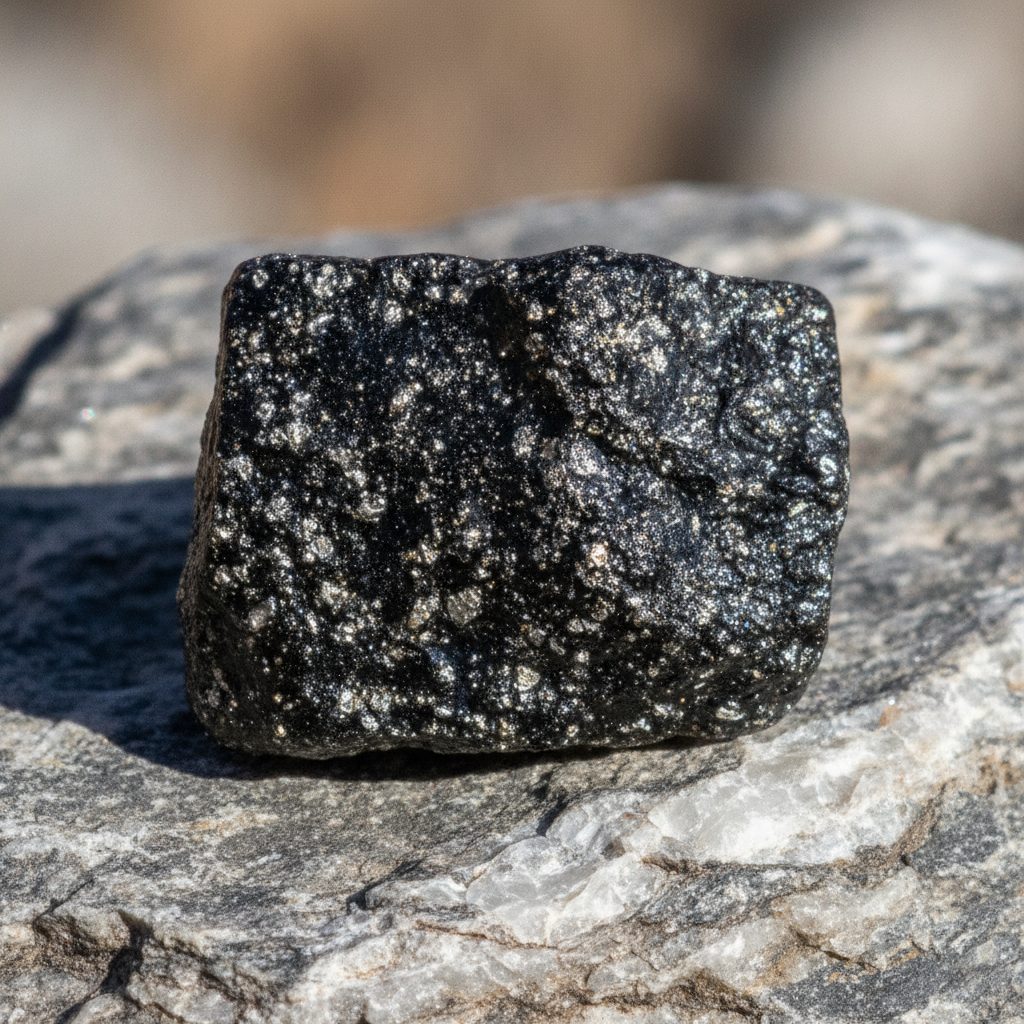
References
- Carrasco-Gallardo C, Guzman L, Maccioni RB. Shilajit: a natural phytocomplex with potential procognitive activity. Int J Alzheimers Dis. 2012;2012:674142. PMID 22482077
- Stohs SJ. Safety and efficacy of shilajit. Phytother Res. 2014;28(4):475-9. PMID 23733436
- Basavaraja D, et al. Chemical analysis of native Himalayan shilajit. ACS Omega. 2025;10(47):57097-57106. PMID 41404054
- Winkler J, Ghosh S. Therapeutic potential of fulvic acid in chronic inflammatory diseases and diabetes. J Diabetes Res. 2018;2018:5391014. PMID 30276216
- Kamgar E, et al. Quantifying of thallium in shilajit and its supplements. BMC Chemistry. 2025. PMID 39827344
- Saper RB, et al. Lead, mercury, and arsenic in US- and Indian-manufactured Ayurvedic medicines sold via the internet. JAMA. 2008;300(8):915-23. PMID 18728265
Leave a Reply