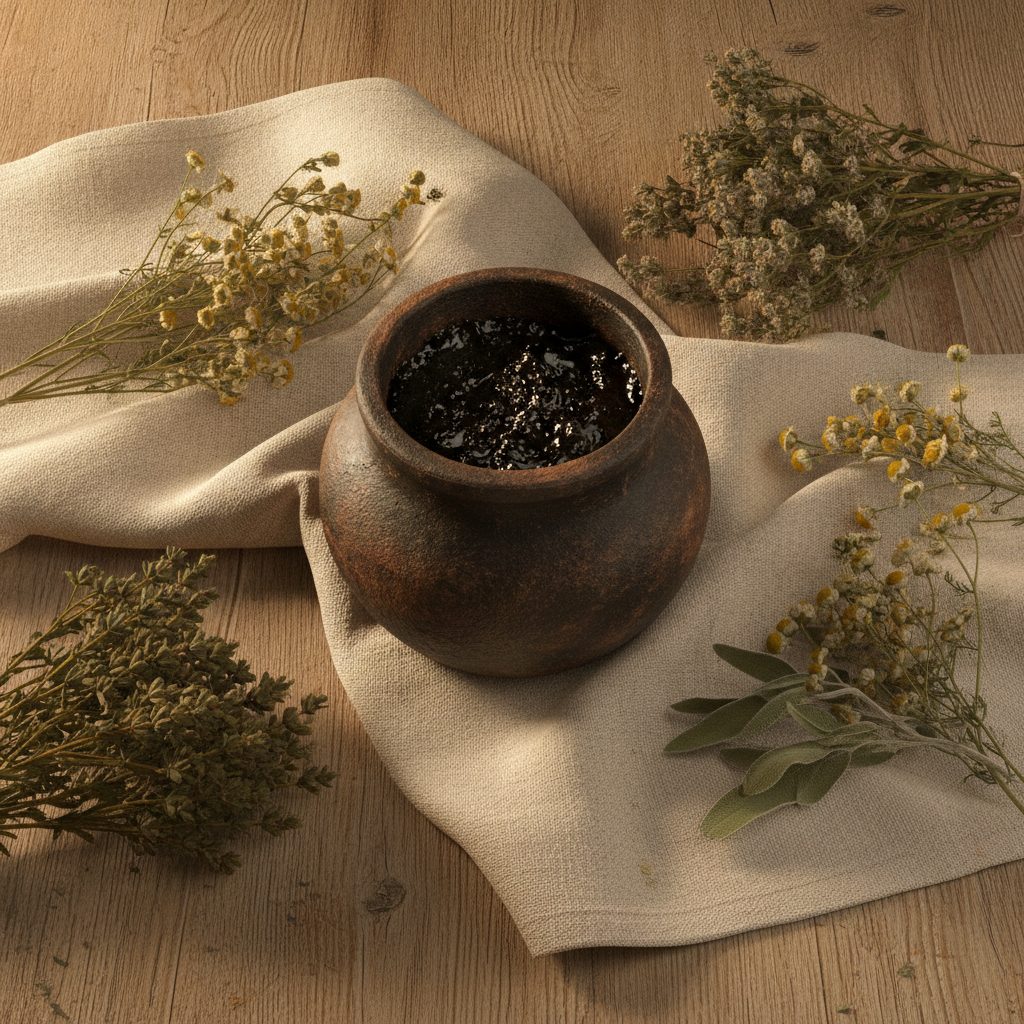
Most of the human research on shilajit was done in men, which makes the marketing aimed at women unusually detached from the evidence. There is one genuine trial in women, and it is not about hormones or menopause at all. This page separates that single real result from the fertility, hormone-balancing, skin, and hair claims that have no human trial behind them, and it gives the androgen side-effect risk the attention that other pages skip.
Educational content, not medical advice. Talk to a qualified clinician before taking shilajit, especially if you are pregnant or breastfeeding, take medication, or have a health condition.
The one real trial in women: bone density
The strongest women-specific evidence is a single randomised trial in postmenopausal women with early bone thinning. Over nearly a year, a standardised shilajit extract slowed the loss of bone mineral density in a dose-dependent way against placebo, with improvements in bone-turnover and oxidative-stress markers. This is a real result and the best women have. It is also one single-centre study, it has not been repeated, and it studied osteopenia rather than osteoporosis, so it does not prove fewer fractures. Treat it as a promising signal in a specific group, not a general reason for every woman to take shilajit.
In postmenopausal women with osteopenia, a standardized shilajit extract at 250 or 500 mg per day for 48 weeks slowed the loss of lumbar-spine and femoral-neck bone mineral density in a dose-dependent way versus placebo, in a single 60-person trial. [Pingali 2022, Phytomedicine] Moderate evidence
Hormones, fertility, and menopause
Here the honest answer is short. No human trial has tested shilajit for female fertility, menstrual regularity, or menopausal symptoms such as hot flushes. The hormone-balancing language on vendor pages is extrapolation from tradition, animal work, or male testosterone data, not a study in women. If a page tells you shilajit balances female hormones or eases menopause, ask which trial in women it is citing. So far there is not one.
The US Department of Defense Operation Supplement Safety states there is little reliable evidence to support shilajit's marketed benefits, with most research conducted in animals. [OPSS, US DoD] Insufficient evidence
The androgen question, which is a caution not a benefit
The one trial people point to for hormones was run only in men aged 45 to 55, and it showed a rise in testosterone and DHEAS. For women, an agent that can raise androgens is a reason for care, not a selling point. Raised androgens can worsen acne, unwanted hair growth, cycle irregularity, and pattern hair loss in susceptible people. This is exactly the effect that vendor pages quietly reframe as a benefit.
The one trial showing a testosterone and DHEAS rise was conducted only in men aged 45 to 55, so for women an androgen-raising agent is a caution that could worsen acne, unwanted hair growth, or cycle changes, rather than a benefit. [Pandit 2016, Andrologia] Preliminary evidence
Cleveland Clinic advises women who are pregnant, breastfeeding, or trying to conceive to avoid shilajit, because its safety in these groups is unstudied and it may raise testosterone. [Cleveland Clinic] Insufficient evidence
Skin and hair
Skin is the one non-bone area with any women-specific human data, and even that is preliminary. In middle-aged women, shilajit improved skin blood flow and switched on skin matrix genes at a higher dose. Read what that actually measured: perfusion and gene activity, not wrinkles, elasticity, or appearance. The research line also traces to the material’s maker, so independent confirmation is still missing.
In middle-aged women, 14 weeks of shilajit improved skin blood flow and activated skin matrix genes at a higher dose, but this measured perfusion and gene expression rather than wrinkles or skin appearance, and the research is tied to the material's maker. [Das 2019, J Am Coll Nutr] Preliminary evidence
Hair is thinner still. No controlled human study shows shilajit grows hair or reduces hair loss. The more defensible hair statement for women is the opposite of the marketing: because shilajit can raise androgens, it carries a theoretical risk of androgenic shedding in those who are prone to it.
No controlled human study shows shilajit grows hair; the more defensible hair statement for women is a caution, since a testosterone-raising agent can drive androgenic shedding in susceptible people. [Cleveland Clinic] Insufficient evidence
Safety and who should avoid it
Two safety points matter most for women. First, purity: raw shilajit can concentrate toxic metals from its host rock, so buy only purified, third-party-tested product with a recent certificate. Second, iron: because shilajit contains iron and its fulvic acid may help the body absorb more, it is generally inadvisable for anyone with an iron-overload disorder. Women who are pregnant, breastfeeding, or trying to conceive, and anyone with active autoimmune disease, should avoid it until better data exist.
Raw or unpurified shilajit can concentrate lead, arsenic, mercury, cadmium, and thallium from its host rock, and a 2025 analysis found some finished supplements contained more thallium than the crude material. [Kamgar 2025, BMC Chemistry] Moderate evidence
Because shilajit contains iron and its fulvic acid may enhance iron absorption, it is generally inadvisable for people with iron-overload disorders such as hemochromatosis, thalassemia, or sickle-cell disease. [Healthline] Moderate evidence
What the research does not support
- Balancing female hormones, easing menopause symptoms, or improving fertility. No human trial in women tests any of these.
- Facial anti-wrinkle or skin-appearance results. The women’s skin study measured blood flow and gene activity, not appearance.
- Hair growth. There is no controlled human hair study, and the defensible statement is a caution.
- The assumption that a purified label means the product is safe. Recent data show some finished products carried more thallium than the raw material.
The honest position for women is this: one real bone-density trial, a preliminary skin signal, a clear androgen caution, and a firm avoid list. For the studies behind these grades, see our science overview. Before buying, read the buying guide on purity and testing, and our FAQ answers common questions on safety and use.
Educational content, not medical advice. Talk to a qualified clinician before taking shilajit, especially if you are pregnant or breastfeeding, take medication, or have a health condition.
References
- Pingali U, Nutalapati C. Effect of standardized shilajit extract on bone mineral density in postmenopausal women. Phytomedicine. 2022;105:154334. PMID 35933897
- Pandit S, et al. Clinical evaluation of purified shilajit on testosterone levels in healthy volunteers. Andrologia. 2016;48(5):570-5. PMID 26395129
- Das A, et al. Skin transcriptome of middle-aged women supplemented with oral shilajit. J Am Coll Nutr. 2019;38(6):526-36. DOI 10.1080/07315724.2018.1564088
- Kamgar E, et al. Quantifying thallium in shilajit and its supplements. BMC Chemistry. 2025. PMID 39827344
- Hussain SA, Saeed AH. Heavy metals in shilajit. Biol Trace Elem Res. 2024. PMID 38393486
- Cleveland Clinic. Shilajit benefits, side effects and uses. clevelandclinic.org
- Healthline. Shilajit: benefits, side effects, and more. healthline.com
- Operation Supplement Safety (US DoD). Shilajit as a dietary supplement ingredient. opss.org
Leave a Reply