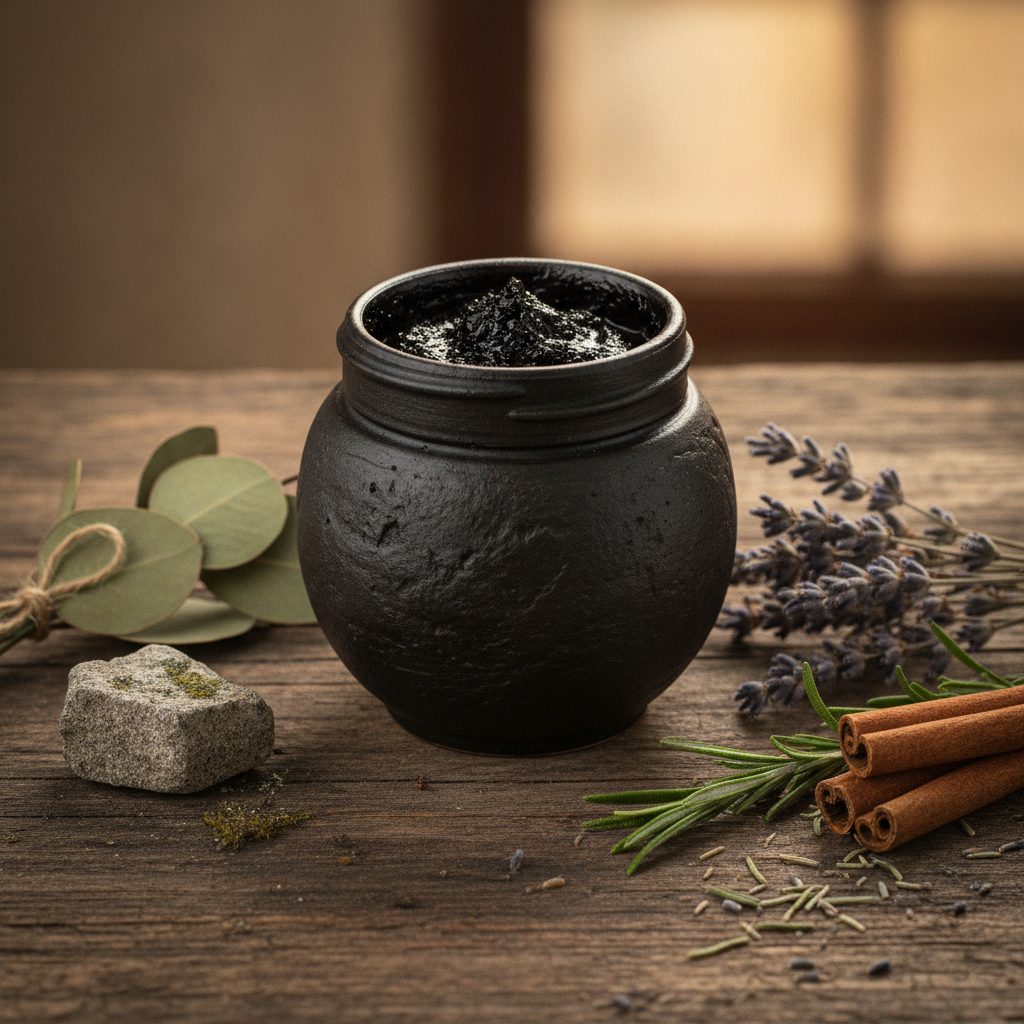
Shilajit is marketed as a fix for almost everything, from testosterone to hair to memory. The research tells a narrower, more honest story: a small number of small human trials, several funded by the ingredient maker, pointing to modest effects on fatigue-resistance and testosterone in middle-aged men, and very little else that holds up. This hub grades what the evidence actually supports and links to the detailed guides for each claim.
Educational content, not medical advice. Talk to a qualified clinician before taking shilajit, especially if you are pregnant or breastfeeding, take medication, or have a health condition.
The benefits, graded by evidence
The best independent human evidence is for fatigue-resistance: 500 mg per day for 8 weeks helped active men retain muscular strength under fatigue and lowered a connective-tissue breakdown marker. [Keller 2019, JISSN] Moderate evidence
A single 90-day trial in men aged 45 to 55 found purified shilajit at 250 mg twice daily raised total and free testosterone versus placebo, but it is one small, manufacturer-linked study with no published effect sizes and no independent replication. [Pandit 2016, Andrologia] Preliminary evidence
An uncontrolled 90-day study in subfertile men reported improved sperm count and quality, but with no placebo group the result cannot be firmly attributed to shilajit. [Biswas 2010, Andrologia] Preliminary evidence
Claims about skin, hair growth, immunity, and memory in humans rest on animal studies, test-tube work, or marketing rather than clinical trials. We label those insufficient, and we explain why on each dedicated page rather than repeating the hype.
Explore the benefits
-
What is shilajit actually good for? Benefits ranked by evidence
A plain-spoken ranking of what shilajit is good for, graded by the actual human evidence rather than the marketing headlines.
-
Can women take shilajit? Benefits, risks, and the androgen question
Women can take shilajit, but the evidence is thin and the androgen and pregnancy cautions matter more than the marketing admits.
-

Does shilajit increase size? Separating the claims from the evidence
There is no evidence shilajit enlarges the penis. Here is why the claim spreads and what the research actually shows instead.
-

Does shilajit boost testosterone? What the one real study shows
The testosterone case for shilajit rests on a single small manufacturer-linked trial, which makes it a preliminary signal rather than proven fact.
-

Shilajit and energy: what the fatigue research actually found
The best human study points to fatigue resistance rather than a stimulant lift, while the mitochondrial and CoQ10 energy claims rest on animal work.
-
Shilajit for men: testosterone, fertility, and energy, honestly assessed
An evidence-graded look at what the small human trials on shilajit actually show for male testosterone, fertility, energy, and libido.
-
Shilajit for women: what the research does and doesn’t show
One real trial supports shilajit for bone density in women, while hormone and menopause claims are unproven and androgen side-effects deserve attention.
What the research does not support
Several popular claims have little or no clinical evidence: guaranteed testosterone gains in young men, hair regrowth, weight loss without diet change, and any wording that suggests shilajit cures or reverses a disease. Where the evidence is only animal or in-vitro, we say so plainly. Honest expectations are the point of this site.
Reminder: if you are pregnant or breastfeeding, take blood thinners or lithium, or have hemochromatosis or an iron-overload condition, do not take shilajit without medical supervision. See side effects and who should avoid it.
Keep reading
Set expectations with the science section, learn to dose it in how to take shilajit, and choose a safe product with the buying guide.