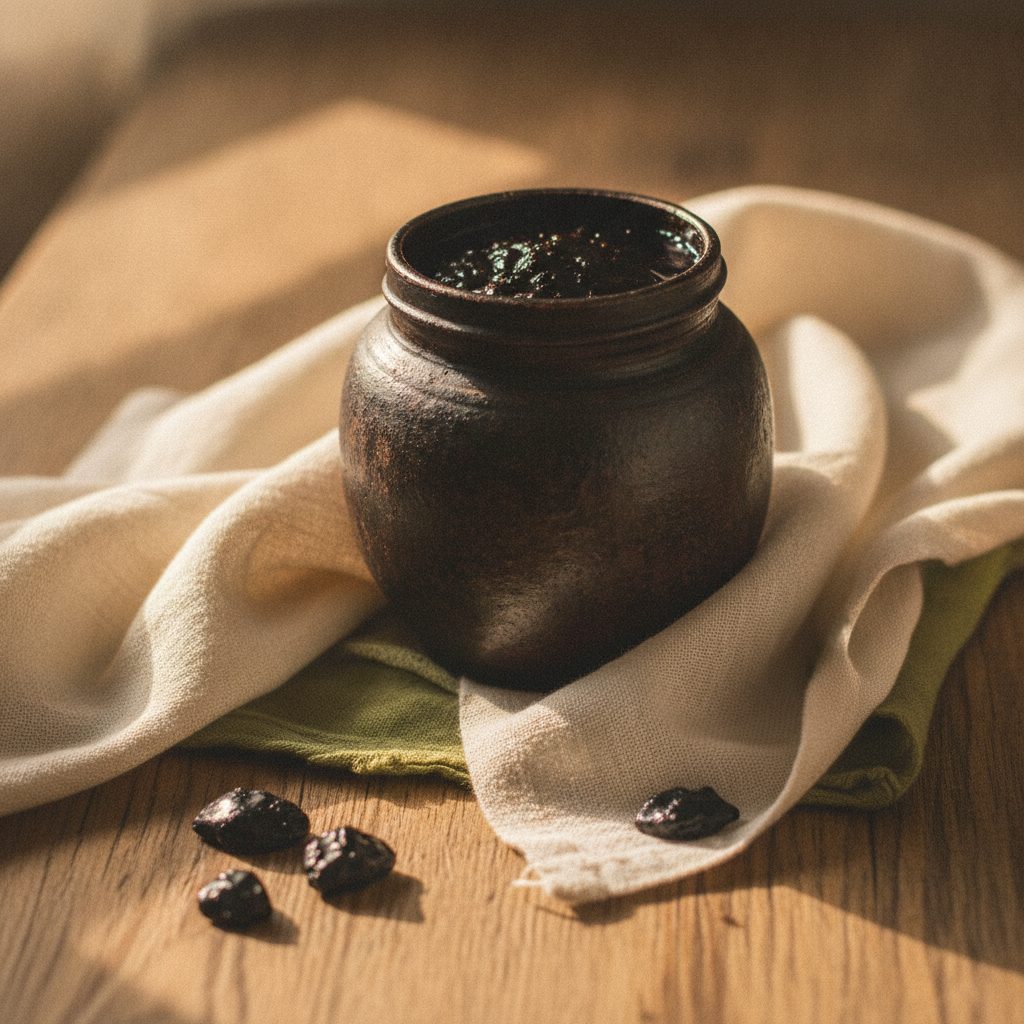
Can women take shilajit? For a healthy, non-pregnant woman using a purified, tested product, there is no clear reason she cannot, but that is a lower bar than most marketing implies. Nearly all the human research was done in men, one of the few real effects is an androgen rise that is a caution for women rather than a benefit, and several groups should avoid it entirely. This page lays out what the evidence supports for women, what it does not, and where the genuine risks sit.
Educational content, not medical advice. Talk to a qualified clinician before taking shilajit, especially if you are pregnant or breastfeeding, take medication, or have a health condition.
The short answer
Shilajit is not a men-only supplement, and nothing about female physiology rules it out for a healthy woman using a purified, third-party-tested product. What is missing is evidence that she should. Most trials studied men, the one substantial women’s trial is about bone density rather than the hormones or energy the ads emphasise, and the clearest hormonal effect on record is an androgen rise that women have more reason to be wary of than to seek. So the accurate answer is: yes, generally, with real caveats, and not for the reasons vendors usually give.
The one real trial in women: bone density
The strongest women-specific evidence is a single randomised trial in postmenopausal women with early bone thinning. Over nearly a year, a standardised shilajit extract slowed the loss of bone mineral density in a dose-dependent way against placebo, alongside better bone-turnover and oxidative-stress markers. This is a genuine result and the best women have. It is also one single-centre study that has not been repeated, and it looked at osteopenia rather than osteoporosis, so it does not prove fewer fractures. Treat it as a promising signal in a specific group, not a general reason for every woman to start.
In postmenopausal women with osteopenia, a standardized shilajit extract at 250 or 500 mg per day for 48 weeks slowed the loss of lumbar-spine and femoral-neck bone mineral density dose-dependently versus placebo, in a single 60-person trial. [Pingali 2022, Phytomedicine] Moderate evidence
The androgen question
This is the point other pages skip. The one trial people cite for shilajit and hormones was run only in men aged 45 to 55, and it showed a rise in testosterone and DHEAS. For a woman, an agent that can raise androgens is a reason for care, not a selling point. Raised androgens can worsen acne, unwanted facial or body hair, cycle irregularity, and androgenic hair thinning in people who are prone to it. Women with polycystic ovary syndrome, who often already run higher androgens, have particular reason to be cautious. Notice what happens in the marketing: the same androgenic effect that is a risk for many women gets quietly reframed as a vitality benefit.
The one trial showing a testosterone and DHEAS rise was conducted only in men aged 45 to 55, so for women an androgen-raising agent is a caution that could worsen acne, unwanted hair growth, or cycle changes, rather than a benefit. [Pandit 2016, Andrologia] Preliminary evidence
Hormones, fertility, and menopause
Here the honest answer is short. No human trial has tested shilajit for female fertility, menstrual regularity, or menopausal symptoms such as hot flushes and mood. The hormone-balancing language on vendor pages is extrapolation from tradition, animal work, or male testosterone data, not a study in women. If a page tells you shilajit balances female hormones, eases menopause, or supports ovulation, the fair question is which trial in women it is citing, because so far there is not one. Independent coverage reflects the same gap, and official bodies do not endorse shilajit for any of these uses.
The US Department of Defense Operation Supplement Safety states there is little reliable evidence to support shilajit's marketed benefits, with most research conducted in animals. [OPSS, US DoD] Insufficient evidence
Skin and hair
Skin is the one non-bone area with any women-specific human data, and even that is preliminary. In middle-aged women, shilajit improved skin blood flow and switched on skin matrix genes at a higher dose over 14 weeks. Read what that measured: perfusion and gene activity, not wrinkles, elasticity, or visible appearance. The research line also traces to the material’s maker, so independent confirmation is still missing. Hair is thinner still, with no controlled human study showing shilajit grows hair. The more defensible hair statement for women is the reverse of the marketing: because shilajit can raise androgens, it carries a theoretical risk of androgenic shedding in those who are susceptible.
In middle-aged women, 14 weeks of shilajit improved skin blood flow and activated skin matrix genes at a higher dose, but this measured perfusion and gene expression rather than wrinkles or skin appearance, and the research is tied to the material's maker. [Das 2019, J Am Coll Nutr] Preliminary evidence
Who should not take it
Some groups should avoid shilajit until better data exist. Women who are pregnant, breastfeeding, or trying to conceive should not take it: its safety in these states is unstudied and it may raise testosterone, which is the opposite of what a pregnancy needs. Anyone with an iron-overload disorder should avoid it, because shilajit contains iron and its fulvic acid may help the body absorb more. Women with active autoimmune disease should be cautious, since shilajit’s fulvic acid has bidirectional immune effects that could, in theory, aggravate a flare. And purity is non-negotiable for everyone: raw shilajit can concentrate toxic metals from its host rock.
Cleveland Clinic advises women who are pregnant, breastfeeding, or trying to conceive to avoid shilajit, because its safety in these groups is unstudied and it may raise testosterone. [Cleveland Clinic] Insufficient evidence
Raw or unpurified shilajit can concentrate lead, arsenic, mercury, cadmium, and thallium from its host rock, and a 2025 analysis found some finished supplements contained more thallium than the crude material. [Kamgar 2025, BMC Chemistry] Moderate evidence
Because shilajit contains iron and its fulvic acid may enhance iron absorption, it is generally inadvisable for people with iron-overload disorders such as hemochromatosis, thalassemia, or sickle-cell disease. [Healthline] Moderate evidence
What the brands claim vs what the evidence shows
Brand pages aimed at women lean heavily on hormone balancing, fertility, glowing skin, thicker hair, and energy. Cymbiotika, Wellness Nest, and others market shilajit for female vitality and wellness; smaller sellers go further into fertility and menopause language. Set against the record, the pattern is clear: the strongest brand-friendly result, bone density, is rarely the headline, while the claims that are heavily promoted, fertility and menopause relief and hormone balance, have no human trial in women at all. The most responsible copy states composition and testing and leaves the outcomes it cannot back unspoken.
- Claimed: balances female hormones. Shown: no human trial in women; the hormonal data are from men.
- Claimed: supports fertility and eases menopause. Shown: nothing in women; tradition and extrapolation only.
- Claimed: better skin and thicker hair. Shown: a preliminary perfusion and gene study, plus an androgenic shedding caution.
- Rarely headlined but real: slowed bone-density loss in postmenopausal women, from one trial.
What real women report
Women’s real-world reports skew more toward the androgenic downside than the marketing suggests. On supplement and women’s health forums, recurring themes include new or worsening acne and cycle changes after starting shilajit, which matches the caution above, alongside some reports of steadier energy or mood. As with men, the dominant practical worries are the strong tar or petroleum taste, fear of fakes, and requests for a certificate of analysis before buying. Women trying to conceive frequently ask whether it is safe and are usually pointed toward avoiding it. The overall community tone for women is more cautious than enthusiastic, which is a reasonable reading of the evidence.
What the research does not support
- Balancing female hormones, easing menopause symptoms, or improving fertility. No human trial in women tests any of these.
- Facial anti-wrinkle or skin-appearance results. The women’s skin study measured blood flow and gene activity, not appearance.
- Hair growth. There is no controlled human hair study, and the defensible statement is a caution.
- Use during pregnancy, breastfeeding, or while trying to conceive, or by women with iron-overload disorders.
The honest position for women is one real bone-density trial, a preliminary skin signal, a clear androgen caution, and a firm avoid list for pregnancy, iron overload, and active autoimmune disease. If you are outside those groups and want to try a purified, tested product, that is a reasonable personal choice made with realistic expectations. For a deeper look at the women’s studies see our page on shilajit for women, for the wider evidence map see the benefits overview, and for common safety questions read the FAQ.
Educational content, not medical advice. Talk to a qualified clinician before taking shilajit, especially if you are pregnant or breastfeeding, take medication, or have a health condition.
References
- Pingali U, Nutalapati C. Effect of standardized shilajit extract on bone mineral density in postmenopausal women. Phytomedicine. 2022;105:154334. PMID 35933897
- Pandit S, et al. Clinical evaluation of purified shilajit on testosterone levels in healthy volunteers. Andrologia. 2016;48(5):570-5. PMID 26395129
- Das A, et al. Skin transcriptome of middle-aged women supplemented with oral shilajit. J Am Coll Nutr. 2019;38(6):526-36. DOI 10.1080/07315724.2018.1564088
- Kamgar E, et al. Quantifying thallium in shilajit and its supplements. BMC Chemistry. 2025. PMID 39827344
- Cleveland Clinic. Shilajit benefits, side effects and uses. clevelandclinic.org
- Healthline. Shilajit: benefits, side effects, and more. healthline.com
- Operation Supplement Safety (US DoD). Shilajit as a dietary supplement ingredient. opss.org
Leave a Reply