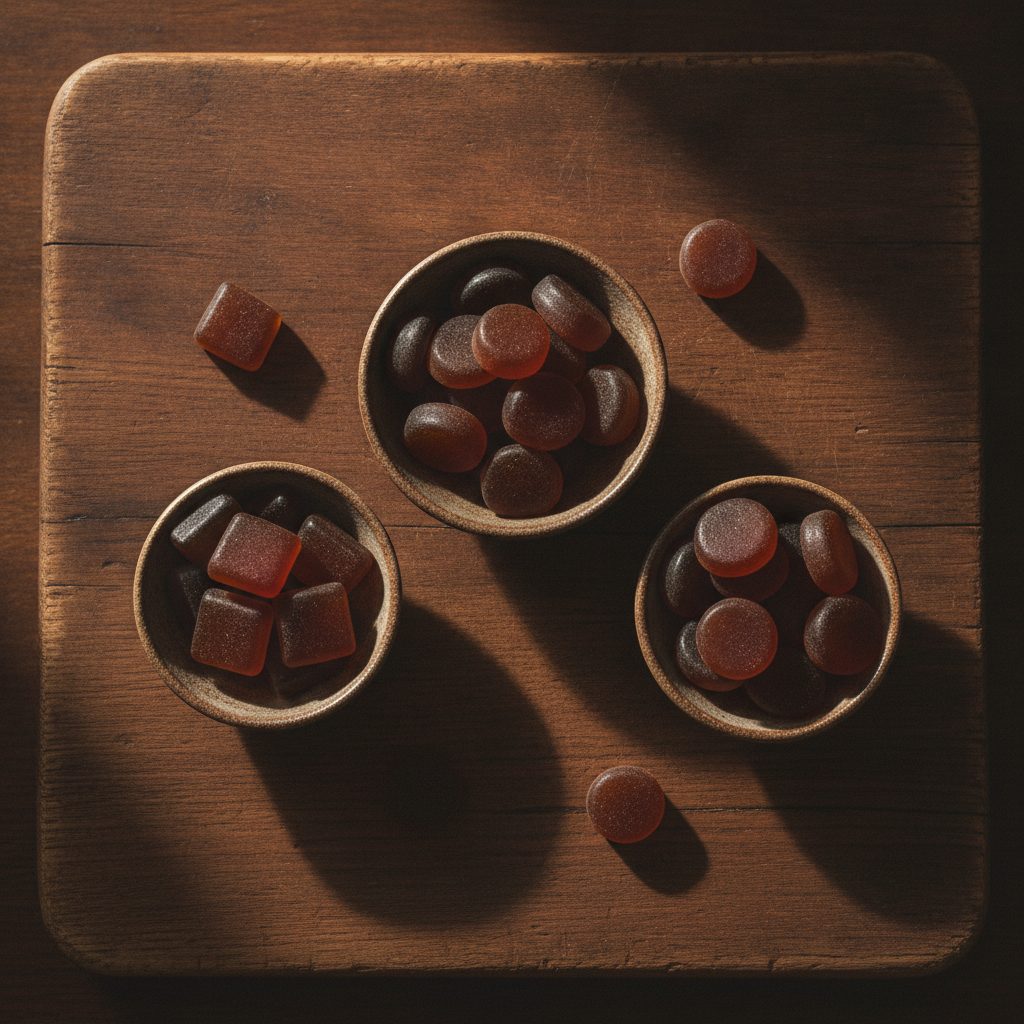
Shilajit gummies are the fastest-growing and most heavily marketed format in the category, sold on convenience and taste rather than potency. The single most important question for any of them is exactly the same as for resin: does the brand publish a current, batch-matched third-party certificate covering heavy metals, including thallium? Most gummies fail that test. Independent analysis suggests gummies are where transparency is weakest, doses are smallest, and value per active is lowest. This assessment compares the main gummy names, Wellness Nest, BetterAlt, VitaCore, the many gold-grade gummies, and Himalayan Natural-style products, on transparency rather than on price or marketing, and explains why resin usually beats a gummy on dose and cost per active.
How this assessment was made. Based on the brands’ publicly available lab certificates, disclosures, and independent testing. Written independently, not a paid placement, and contains no affiliate links.
Does the category publish lab certificates?
As a category, no. The most useful data point comes from an analysis of 50 shilajit gummy brands, which found that more than two-thirds had major transparency or accuracy problems on their labels or product pages, that 38 per cent misstated their shilajit content, and that only two of the fifty used a shilajit backed by clinical research. The same review found the price per gram of shilajit varied by roughly 9,400 per cent between products, from about 40 cents to nearly 37 dollars per gram, which tells you the market has almost no shared standard. A published, batch-matched certificate is rare in this format, and that alone is the strongest reason to be cautious with gummies.
An analysis of 50 shilajit gummy brands found more than two-thirds had major transparency or accuracy problems, 38 per cent misstated their shilajit content, only two of fifty used a clinically studied shilajit, and price per gram varied by about 9,400 per cent between products. [CHOQ 50-brand analysis] Moderate evidence
A common trick makes the problem worse. Many gummy labels quote a pre-extraction equivalent amount rather than the actual amount of shilajit extract in the product, so a gummy can appear to contain ten, twenty or thirty times more than it really delivers. Add the sugar, which the 50-brand analysis measured at 1 to 6 grams per serving with a fair share of products using corn or glucose syrup, and the format’s weakness is clear. The wider testing picture reinforces it: independent lab work has shown fulvic-acid content across shilajit products varies by many thousands of per cent, and a 2025 study found thallium in some supplements, so verifying what is inside matters as much for a gummy as for anything else.
A 2025 peer-reviewed analysis detected thallium in commercial shilajit supplements, in some cases higher than in the raw material, and separate independent testing found fulvic-acid content varied by many thousands of per cent, so a gummy needs a batch certificate just as a resin does. [Kamgar 2025] Strong evidence
What the main brands claim
Judged on transparency rather than hype, the named gummy brands separate into a rough order. Of the group, Wellness Nest takes the strongest public posture: its site states it publishes the lab report for every batch, and independent write-ups describe accredited testing. That posture still needs a buyer to open the live certificate and confirm the lot matches the jar and that heavy metals, ideally including thallium, are listed with numbers, and the gummy remains a gummy with the usual small-dose caveat. BetterAlt sells gummies and honey sticks alongside a resin and claims third-party testing with more than 75 per cent fulvic acid and 85-plus minerals, but no current batch-matched certificate surfaced publicly, and its Trustpilot profile carries recurring delivery and refund complaints.
VitaCore markets its gummies as rich in fulvic acid with 80-plus minerals and non-GMO, yet independent scrutiny found no credible sourcing detail and no verifiable third-party lab report or certificate, and its Trustpilot reviews raise operational concerns including non-delivery, duplicate charges and a mismatch between the front and back of the packaging. It sits at the weakest end on transparency. The gold-grade gummies are not a single brand at all: gold grade is a marketing descriptor used by many sellers, from Be Bodywise to assorted Walmart and Amazon listings, so the name signals premium positioning rather than a defined purity standard, and each listing must be judged on its own certificate. Himalayan Natural-style products are similarly diffuse, with the Himalayan label functioning largely as marketing; some sellers in this space do claim third-party lab testing, but certificate availability is inconsistent and the naming is easy to confuse between vendors.
Shilajit Gold is an Ayurvedic and marketing descriptor rather than a defined purity standard, and gold grade is used across many unrelated sellers, so the name should be treated as branding and each product judged on its own published certificate. [Buying evidence pack] Preliminary evidence
What independent testing and users show
The independent evidence points the same way across sources. ConsumerLab’s 2024 round tested curated products and found heavy metals below levels of concern at one daily dose, but it also found the enormous fulvic-acid variance that makes label numbers unreliable, and its clean results applied to hand-picked products rather than the random gummy market the 50-brand analysis warns about. Enthusiast communities are openly sceptical of gummies, describing them as candy with a sprinkle of shilajit, and the recurring advice is to ask for the certificate and to prefer resin or a standardised extract. Even on cost, the maths favours other formats: because extracts are more concentrated, they were found to be cheaper than resins for an equivalent amount of fulvic acid, and both beat a sugar-loaded gummy on active delivered per dollar.
Independent testing of curated shilajit products found heavy metals below levels of concern at a single daily dose but confirmed a very large variance in fulvic-acid content, and concentrated extracts were cheaper than resins for an equivalent amount of fulvic acid. [ConsumerLab 2024] Moderate evidence
User sentiment across Trustpilot and independent review sites tracks the transparency ranking closely. Brands that publish reports and sell a resin draw more praise on product quality; brands with no verifiable certificate draw more complaints about delivery, billing and whether the product is genuine at all. None of the named gummy brands showed an independently documented heavy-metal failure, but for most the reason is simply that no independent lab tested them, which is not reassurance.
There is a simple way to see through the format’s main trick at the shelf. Ignore any large equivalent milligram number on the front and look instead for two things on the back: the actual amount of shilajit extract per gummy, and a stated fulvic-acid percentage produced by a named test method. If a product will only quote a pre-extraction equivalent, or lists fulvic acid with no percentage and no method, it is telling you it has nothing to verify. Then weigh the sugar, since even a few grams a day adds up across a bottle, and check whether a batch certificate is actually published rather than merely promised. Applied honestly, that filter removes most of the market, which is the real reason gummies rank where they do.
Who they suit and open questions
Gummies suit a narrow case: a buyer who will not stick with resin or capsules, who values adherence and taste over dose, and who is willing to pay more per active for the convenience. Even then, the only defensible pick is a gummy that publishes a current batch certificate, states a real fulvic-acid percentage by a named method, discloses the actual, not pre-extraction, shilajit amount, and keeps sugar low. For almost everyone focused on dose and value, resin or a standardised extract with a certificate is the better choice, and the honest conclusion is that resin usually beats gummies on both dose and cost per active.
- Best transparency among the named gummies: Wellness Nest, on the strength of publishing batch reports, subject to opening and verifying the live certificate.
- Weakest: VitaCore, with no verifiable certificate and recurring operational complaints; gold-grade and Himalayan Natural names are descriptors to check case by case.
- The category verdict: small doses plus sugar plus rare certificates mean resin usually wins on dose and value.
For a plain-English walkthrough of reading a certificate and comparing cost per active before you buy, see the buying guide. To compare every brand on the same public evidence, see the brand reviews hub, and for the two gummy-selling brands assessed in full, read the Wellness Nest assessment and the BetterAlt assessment.

References
- CHOQ. Shilajit gummies review: an analysis of 50 different brands. choq.com
- ConsumerLab.com. Shilajit supplements tested for heavy metals and fulvic acid, 26 September 2024. consumerlab.com
- Kamgar E, et al. Quantifying thallium in shilajit and its supplements. BMC Chemistry. 2025. PMID 39827344
- Examine.com. Shilajit overview. examine.com
- Trustpilot. Reviews of vitacore.com (secondary summary; verify live before relying on it). trustpilot.com
Leave a Reply