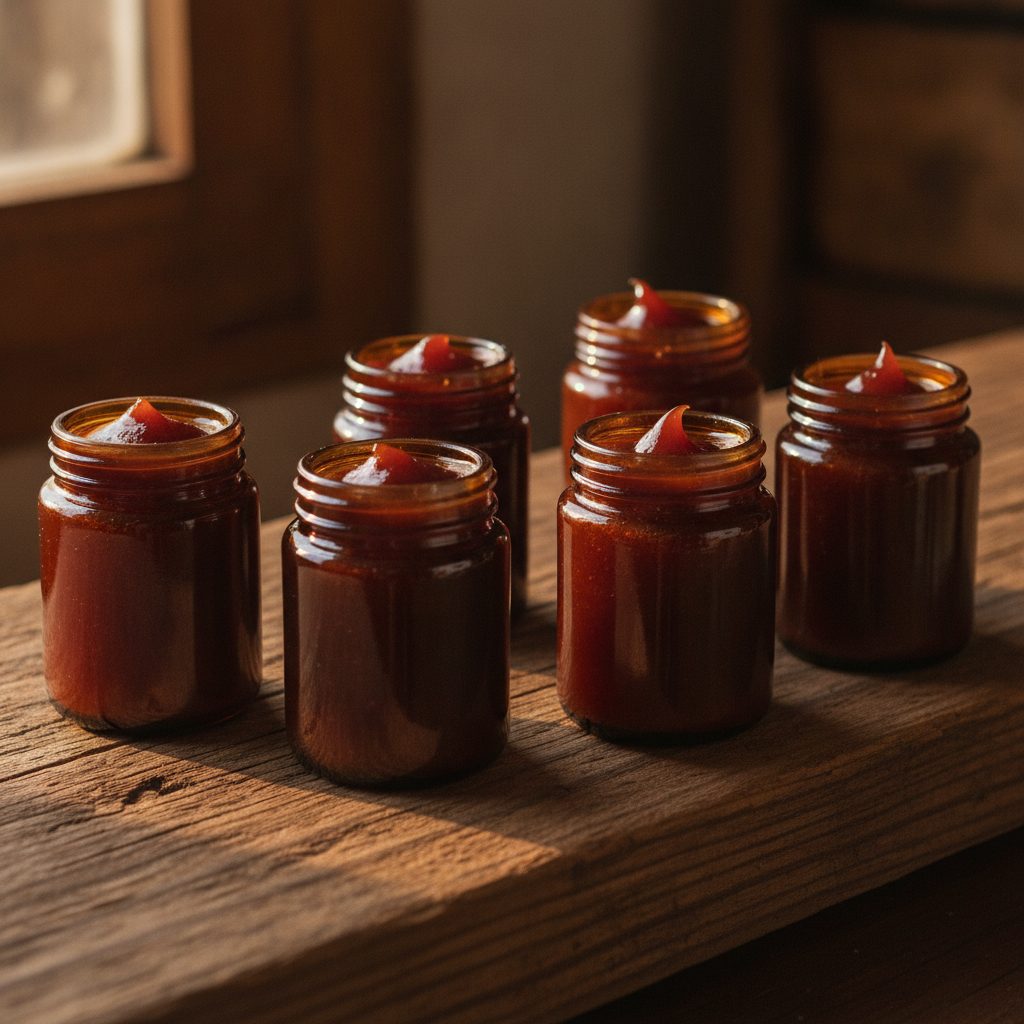
Search for the best shilajit and you get a wall of brands each calling itself the purest, the most potent, or the only real one. None of those words are checked by anyone before the jar reaches you. The honest way to choose is to ignore the marketing and judge a product on things a laboratory can actually confirm: a matching certificate, a measured fulvic-acid percentage, a form that suits how you will use it, and a price that makes sense. This guide shows how.
Why best shilajit is the wrong thing to search for
Shilajit is a supplement, not a medicine, so no regulator approves it or tests it for purity before sale. That means the label is a claim, not a guarantee. The word best, applied by a seller to its own product, carries no more weight than pure or premium. What separates a good jar from a risky one is not the brand name on the front but the evidence behind it. Treat best as a set of criteria you apply yourself, not a title a company can award itself.
The FDA does not approve dietary supplements for safety or effectiveness before they are sold, and manufacturers are responsible for their own products, so a purity or potency claim on a shilajit label is not verified by any authority in advance. [FDA, Dietary Supplements] Strong evidence
The one thing that separates good from guesswork
The single most useful signal of quality is a batch-specific certificate of analysis, or COA, whose lot number matches the jar you are holding. This is the document that reports heavy-metal results and, on a good certificate, the fulvic-acid content. It exists precisely because you cannot see contamination, and no kitchen test can.
Raw shilajit routinely carries lead, arsenic, cadmium, and mercury, and a 2012 review concluded it should not be consumed unpurified because of the risk from heavy metal ions, mycotoxins, and free radicals. [Carrasco-Gallardo 2012] Strong evidence
A 2025 peer-reviewed analysis found several commercial shilajit supplements contained thallium, a metal more toxic than mercury, cadmium, and lead, and that every product tested provided no information on its composition or heavy-metal content on the packaging. [Kamgar 2025, BMC Chemistry] Strong evidence
The practical rule follows directly. If a seller cannot produce a certificate whose batch number matches your jar, run by a named third-party lab, you have no way to know what is in the product. A good COA should list lead, arsenic, cadmium, and mercury, ideally thallium as well, each with a numeric result and a detection limit, tested by ICP-MS, from an ISO 17025 accredited lab. Contamination is not universal, which is the encouraging part, but the certificate is the only way to tell a clean product from a contaminated one.
Independent testing of 8 popular US shilajit products in September 2024 found lead, cadmium, arsenic, and mercury below levels of concern at one dose per day, showing that reputable products can be clean when they are tested. [ConsumerLab 2024] Moderate evidence
What active actually means: fulvic acid and DBPs
Almost every label mentions fulvic acid, because it is the compound most associated with shilajit’s activity. The problem is that the phrase contains fulvic acid tells you nothing about how much. A meaningful product states a percentage measured by a named method, not just the ingredient name.
Independent testing found fulvic-acid content per serving varied by roughly 32,000 percent across shilajit products, from about 6.9 milligrams to 2,206 milligrams, so a fulvic-acid claim is meaningless without a percentage and a stated test method. [ConsumerLab 2024, via Examine] Strong evidence
There is a second layer worth knowing. Fulvic acid acts as a carrier for a family of compounds called dibenzo-alpha-pyrones, or DBPs, which are part of what distinguishes genuine standardised shilajit from a plain fulvic or humic extract. Standardised ingredients state both numbers, which is why they are easier to verify than an anonymous resin.
The standardised ingredient PrimaVie is water-purified shilajit standardised to at least 60.3 percent fulvic-acid equivalents, and the foundational purification patent sets purified shilajit at at least 60 percent fulvic acid plus at least 0.3 percent oxygenated dibenzo-alpha-pyrones. [Examine and Ghosal US Patent 6,869,612 B2] Strong evidence
The takeaway is not that only one branded extract counts. It is that a stated, measured percentage beats an adjective every time. A jar that says at least fifty percent fulvic acid with a test method behind it has told you something. A jar that says maximum potency has not.
Form: resin, powder, capsule, or gummy
Form is a genuine choice, not a quality ranking on its own, but it affects both verification and value. Whatever the form, a heavy-metal certificate still governs, because contamination risk does not disappear when a resin is turned into a capsule.
Resin is the least-processed form with the highest active content per gram, powder is the easiest to cut with fillers and hardest to verify, capsules trade some potency for precise dosing, and gummies typically carry the least active content alongside added sugar. [Vitadote and Kats Botanicals form comparisons 2025] Moderate evidence
An analysis of 50 shilajit gummy brands found 38 percent misrepresented the amount of shilajit by listing pre-extract weights, with one product claiming 1,000 milligrams while containing only 50 milligrams of extract standardised to about 5 percent fulvic acid. [CHOQ 50-brand gummy analysis] Moderate evidence
In plain terms: resin tends to give the most active compound per pound spent but is messy to dose. A capsule made from a standardised extract with a published COA can be more trustworthy than an unlabelled pure resin, because you know the numbers. Gummies are usually the weakest value, since a sweet, low-dose format is both underpowered and, by definition, mixed with sugar. Choose the form that fits your routine, then apply the same certificate test to it.
What a fair price looks like
Price is a filter, not a verdict. It cannot prove quality, but a price that is far too low is a reliable warning. Genuine, lab-tested resin costs real money to source and purify, so the bargain bin is where most fakes live.
| Form | Typical real price | What to expect |
|---|---|---|
| Resin (lab-tested) | About 40 to 80 dollars per 30 g jar, roughly 1.30 to 2.70 dollars per gram | Best value per active milligram; under a dollar a day at a pea-sized dose |
| Capsules or tablets | About 25 to 49 dollars per bottle | Convenient and precise; costs more per effective milligram, so check the fulvic percentage |
| Powder | Around 39 dollars is common | Highest adulteration risk; buy only if lab-tested |
| Gummies | Often sold cheap | Usually the worst value per active milligram; added sugar |
| Anything pure under about 10 dollars | Too good to be true | Treat as a red flag for adulteration or a fake |
Prices far below the market rate, such as pure shilajit sold for under about 10 dollars, are almost always adulterated, diluted, or fake, while authentic lab-tested resin typically works out at roughly 1.30 to 2.70 dollars per gram. [Biyode 2025] Moderate evidence
What the brands claim versus what a lab certificate proves
Brand pages and marketplace listings lean on a small set of reassuring phrases. It is worth setting each one next to what it would take to actually confirm the claim.
| Marketing phrase | What a COA would need to show |
|---|---|
| 100 percent pure | An ICP-MS heavy-metal panel with numbers and detection limits, plus an authenticity method such as FTIR |
| Rich in fulvic acid | A stated fulvic-acid percentage by a named method, matched to the batch |
| Lab tested | A named accredited lab, a test date, and a lot number matching your jar, not the word tested alone |
| Sourced from pristine mountains | Region and harvest detail on the certificate; origin words alone prove nothing |
| Highest potency available | A measured active percentage you can compare, not a superlative |
The pattern is consistent. Every marketing phrase points to a number or a document that would settle it. A brand that has the evidence tends to publish it. A brand that only has adjectives is asking you to take the label at its word, which is the one thing the market gives you no reason to do.
What real users report
Across supplement discussion communities the pattern is remarkably steady, even if individual threads vary. The recurring advice is to ask for the lab report before anything else, to treat home tests as a rough first filter rather than proof, and to be wary of very cheap resin and of gummies described as candy with a sprinkle of shilajit. When people name products they trust, the common thread is not a marketing slogan but published, batch-level testing, most often standardised extracts and a handful of resin brands that post their certificates. We treat this community sentiment as directional rather than definitive, because forum posts are not lab data, but the direction is clear: experienced buyers judge on evidence, not branding.
The buyer’s checklist
Work down this list before you buy. The first three items are decisive; the rest are supporting.
- A batch-specific COA whose lot number matches the jar. No COA, no purchase.
- An ICP-MS heavy-metal panel with numeric results and detection limits, from an accredited lab.
- A stated fulvic-acid percentage by a named method, and a DBP figure if it is a standardised extract.
- A realistic price. Reject anything pure sold for a few dollars.
- Transparent origin and extraction detail, not just a region name.
- A form that fits your routine, with the certificate applied to that exact form.
Choose on those six points and the question of best answers itself. The best shilajit for you is the one that can prove what it is, not the one that shouts loudest. For the deeper detail, read our guide to reading a shilajit lab certificate, learn which home tests actually catch fakes, and see how specific products score in our brand reviews.

References
- Kamgar et al. Quantifying thallium in shilajit and its supplements. BMC Chemistry. 2025. source
- Carrasco-Gallardo et al. Shilajit, a natural phytocomplex. Int J Alzheimers Dis. 2012. source
- ConsumerLab. Shilajit supplements found to contain high amounts of fulvic acid. 2024. source
- Examine. Shilajit overview. source
- Ghosal S. US Patent 6,869,612 B2, purified shilajit composition. 2005. source
- FDA. Dietary supplements. source
- CHOQ. Shilajit gummies, an analysis of 50 brands. source
- Biyode. Shilajit original price, what you need to know. 2025. source
Leave a Reply