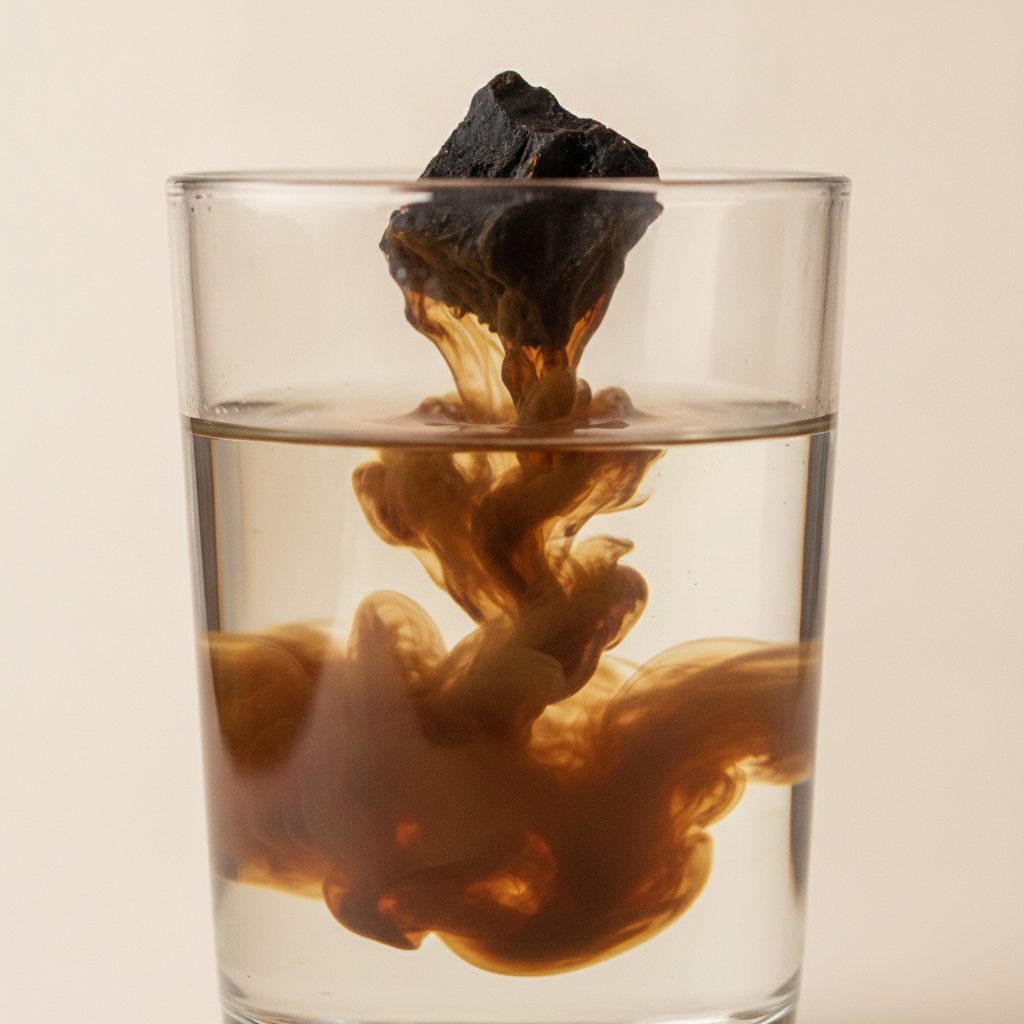
Search for how to spot fake shilajit and you will find dozens of pages telling you to dissolve a lump in water or hold a flame to it. Some of those tests do catch crude fraud. None of them can tell you whether a product is safe to swallow. This guide sorts the useful screens from the myths, and explains why the only real proof of quality is a document, not a kitchen experiment.
Why the market is full of fakes
Shilajit is expensive to source and easy to imitate. A dark, sticky resin can be faked with tar, clay, wax, starch, or cheaper humic extracts, and the finished product is sold as supplement, so no authority checks it for purity before it reaches you. That gap is why home tests exist at all. They are a reasonable first filter. The trouble starts when sellers present them as proof of purity, which they are not.
Prices far below the market rate, such as pure shilajit sold for under about 10 dollars, are almost always adulterated, diluted, or fake. [Biyode 2025] Moderate evidence
The home tests that genuinely help
A few simple checks are worth doing because they reliably catch obvious fakes. Think of them as a way to reject the worst products, not to approve a good one.
Genuine purified shilajit resin dissolves in warm water to a dark brown or golden solution with no sand, grit, or oily film, whereas residue or an oily slick points to soil, sand, or petroleum-based fillers. [Kashmiril 2024 to 2025] Moderate evidence
The dissolve test is the most useful of the lot, but only as a negative screen. It rules out insoluble junk such as dirt, charcoal, or sand. It cannot tell real shilajit apart from a soluble look-alike, and it cannot detect heavy metals, which dissolve invisibly.
Authentic shilajit resin is thermoplastic, becoming soft and stretchy at body heat and hard and brittle when cold or frozen. [Cymbiotika 2024 to 2025] Moderate evidence
Real shilajit tastes bitter and earthy, never sweet, so a sweet taste signals added sugar, jaggery, molasses, or chocolate used as filler. [Cymbiotika 2024 to 2025] Moderate evidence
The thermoplastic and taste checks are supporting signs. Warm-soft, cold-hard behaviour fits genuine resin, but clay, wax, and starch blends can mimic it. Sweetness is a genuine red flag, especially for gummies and syrups, though the absence of sweetness proves nothing on its own.
The tests that do not prove what people think
Two popular tests circulate on social media as if they were definitive. Both are weaker than they look.
In the flame test, real shilajit does not catch a self-sustaining flame; it softens, bubbles, releases water and carbon dioxide, and carbonises to grey or white ash, which rules out petroleum adulterants such as ozokerite, coal tar, and asphalt that would ignite. [Kashmiril 2024 to 2025] Moderate evidence
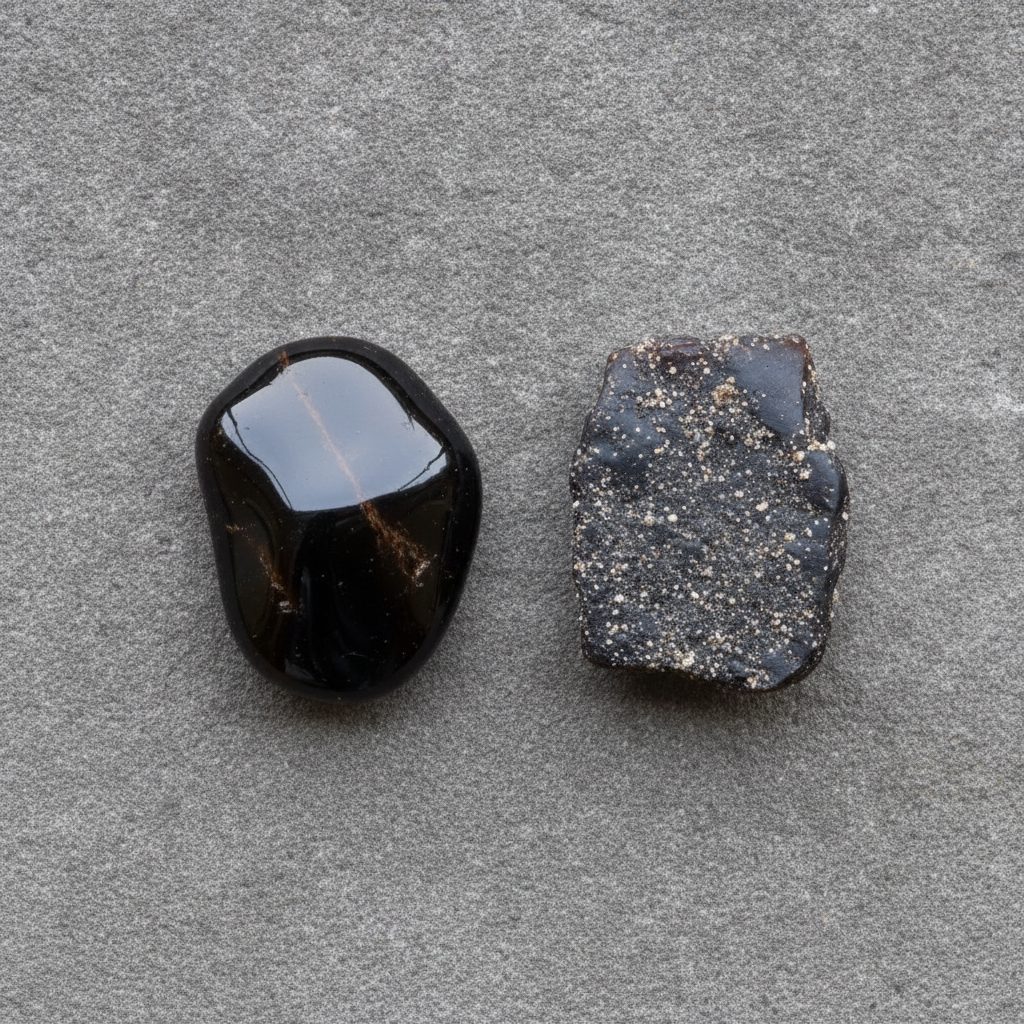
The flame test has a real but narrow use. It catches petroleum-based fakes. What it cannot do is confirm purity, because leonardite, an oxidised brown coal, also bubbles, swells, and carbonises without flaming while carrying none of shilajit’s active compounds. The popular claim that does not burn means pure is a myth. A convincing coal look-alike passes the same test.
Shilajit is water-soluble but should not fully dissolve in alcohol, and full alcohol solubility is said to suggest synthetic resin or additives, though this claim is not backed by a primary analytical reference. [Cymbiotika 2025] Preliminary evidence
Myths versus reality
| The claim | What it actually shows |
|---|---|
| It dissolves in water, so it is pure | Only that it has no sand or dirt. Soluble fakes and heavy metals pass. |
| It did not catch fire, so it is real | Only that it is not petroleum. Leonardite and coal look-alikes also pass. |
| It goes soft in my hand, so it is genuine | A supporting sign only. Wax and starch blends behave the same way. |
| It is not sweet, so there are no fillers | Sweetness is a red flag, but plenty of fakes are bitter too. |
| It has a lab certificate I can match to the jar | The one check that actually addresses safety and potency. |
The only real proof
Home tests cannot see the things that make shilajit unsafe. That is not a theoretical concern.
A 2025 peer-reviewed analysis found several commercial shilajit supplements contained thallium, a metal more toxic than mercury, cadmium, and lead, in some cases at higher levels than the raw source material, and no product disclosed its composition on the package. [Kamgar 2025, BMC Chemistry] Strong evidence
Cleveland Clinic guidance omits home dissolve and flame tests entirely and instead advises relying on independent lab testing and a certificate of analysis. [Cleveland Clinic 2024 to 2025] Moderate evidence
The practical rule is short. A home test can flag an obvious fake. Only a matching, accredited certificate of analysis can flag an unsafe one. If a seller cannot produce a batch-specific certificate whose lot number matches your jar, no amount of dissolving or burning makes the product trustworthy.
To go deeper, read our walkthrough on what the research actually shows, learn how to take a genuine product once you have one, and see how specific products score on testing and transparency in our brand reviews.
References
- Kamgar et al. Quantifying thallium in shilajit and its supplements. BMC Chemistry. 2025. source
- Cleveland Clinic. Shilajit benefits. 2024 to 2025. source
- Kashmiril. What the flame test actually shows about shilajit. 2024 to 2025. source
- Kashmiril. Pure shilajit versus fake shilajit. 2024 to 2025. source
- Cymbiotika. How to tell if your shilajit is real. 2024 to 2025. source
- Biyode. Shilajit original price, what you need to know. 2025. source
Leave a Reply