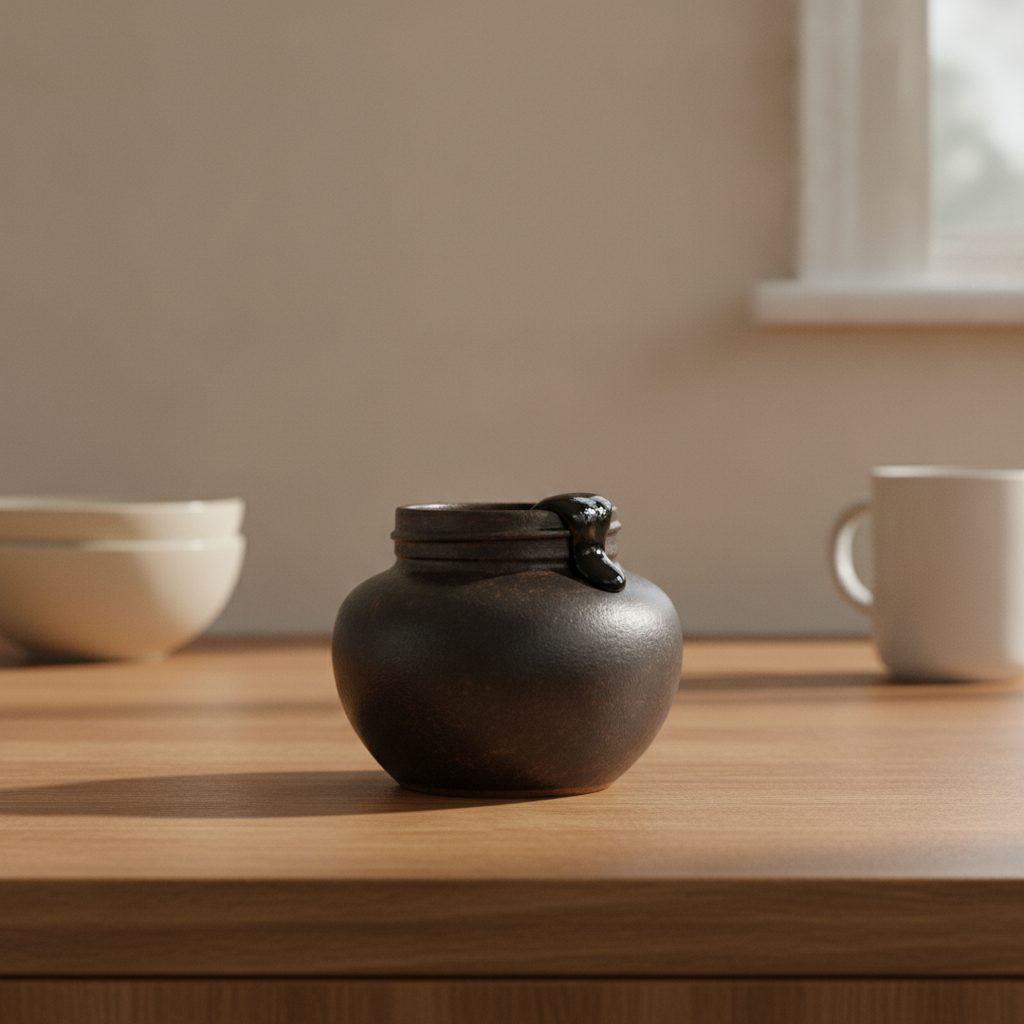
Where you buy shilajit changes how likely you are to get a real, safe product. The same brand name can be genuine on a company’s own site and counterfeit in a marketplace listing that borrows its photos. Because no authority checks a supplement for purity before sale, the buying channel becomes one of your few practical defences. This guide ranks the common places people buy shilajit by how much they let you verify what you are getting, and flags the channels to avoid.
The channel changes the risk
Every buying decision for shilajit comes back to one question: can you get a batch-specific certificate of analysis that matches the jar? A channel is good to the extent that it makes that easy and honest, and risky to the extent that it hides who actually made and tested the product.
The FDA does not approve dietary supplements for safety or effectiveness before they are sold, so no authority verifies a shilajit product's purity in advance regardless of where it is sold. [FDA, Dietary Supplements] Strong evidence
Raw shilajit routinely carries lead, arsenic, cadmium, and mercury, and a 2025 analysis found several commercial supplements also contained thallium while disclosing no composition data on the packaging, which is why verifiable third-party testing matters more than a familiar storefront. [Kamgar 2025, BMC Chemistry] Strong evidence
Buying direct from the brand
Buying from a brand’s own website is usually the lowest-risk option, for a simple reason: the seller and the maker are the same party, so there is no room for a third party to swap the product. The better brands publish batch-level certificates on the product page, sometimes tied to the exact lot number printed on the jar.
Independent testing of 8 popular US shilajit products in September 2024 found lead, cadmium, arsenic, and mercury below levels of concern at one dose per day, but that was a hand-picked set of reputable products rather than a random sample of what is sold online. [ConsumerLab 2024] Moderate evidence
Direct is not automatically safe, though. A brand-new site with no lab reports, no company details, and a checkout that only takes unusual payment methods deserves the same suspicion as any marketplace listing. The advantage of direct buying is that a serious brand has somewhere to publish its evidence and a reputation to protect. Use that: read the certificate before you read the testimonials.
There is a practical test for a direct seller. Look for a certificate that is dated, tied to a lot number, and run by a named laboratory, rather than a single glossy image captioned lab tested. Check whether the company lists a real address and a way to contact a human. Brands that stand behind their testing usually make it easy to find, because the transparency is part of what they are selling. When a direct site buries or omits the certificate, the convenience of buying from the source has quietly evaporated.
Open marketplaces: the highest-risk channel
Large marketplaces such as Amazon and the third-party side of Walmart are where most people start, and where most of the trouble is. The problem is not the platform itself but the flood of anonymous and near-anonymous sellers, plus practices like combining different sellers’ stock under one listing, which make provenance hard to trust.
Independent commentary on the category estimates that a large share of cheap marketplace shilajit listings are counterfeit or under-dosed, and one analysis of 50 gummy brands found 38 percent misrepresented the amount of shilajit on the label. [Outliyr and CHOQ analyses] Moderate evidence
Marketplaces are not hopeless. Buying a specific, well-reviewed brand that also sells direct, sold and shipped by that brand rather than a random reseller, and cross-checking the certificate on the brand’s own site, brings the risk much closer to buying direct. The danger is the generic listing: an unbranded pure Himalayan resin, a suspiciously low price, a wall of five-star reviews, and no lab report you can trace to a real company. That combination is the marketplace fake in its natural form.
Regulators do act after the fact on shilajit, including a 2025 public-health advisory from the Philippine FDA against an unregistered shilajit supplement styled after a major retail brand, showing that even big-brand-looking products can be unauthorised. [FDA Philippines advisory 2025] Moderate evidence
Curated retailers and health stores
Between brand-direct and open marketplaces sit curated supplement retailers, both online and physical health stores. These carry a vetted list of brands rather than letting anyone list a product, which filters out the worst of the anonymous sellers.
The quality of a curated retailer depends entirely on how strict its vetting is, and that varies. The useful move is the same everywhere: identify the actual brand behind the product, then go and find that brand’s certificate. A good retailer stocks brands that publish COAs; the retailer’s shelf is a convenience, not a substitute for the paperwork. A physical shop has one extra advantage, which is that you can inspect the jar and ask a person where the testing lives, but it is no guarantee on its own.
One caution applies specifically to curated online storefronts: some are themselves marketplaces with a friendlier front end, meaning outside sellers can still list products alongside vetted ones. Read who the seller of record is, not just the storefront’s reputation. If a store lets third parties list, the same rule as the big marketplaces applies, and the brand’s own published certificate is still the thing that settles it.
Where not to buy
Some channels combine every risk factor at once. These are the ones to walk away from.
- Social media shops and short-video sellers pushing a resin with dramatic before-and-after claims and no traceable company or certificate.
- Unbranded or no-name jars, however authentic the packaging looks, with no lab report you can match to a batch.
- Anything pure priced far below the market, which is the single most reliable signal of adulteration or a fake.
- Sellers who answer a request for a certificate with reassurance instead of a document.
Prices far below the market rate, such as pure shilajit sold for under about 10 dollars, are almost always adulterated, diluted, or fake, while authentic lab-tested resin typically runs to roughly 1.30 to 2.70 dollars per gram. [Biyode 2025] Moderate evidence
What the listings claim versus what a certificate proves
Marketplace copy and brand pages share a vocabulary of reassurance. It is worth knowing which phrases carry weight and which are decoration.
| What the listing says | What actually reduces your risk |
|---|---|
| Thousands of five-star reviews | A batch COA you can trace to a named company and lab; reviews can be seeded or borrowed |
| Lab tested and certified | The certificate itself, with a lot number matching the jar, a test date, and an accredited lab |
| Sold by an official store | Sold and shipped by the brand you can verify on the brand’s own site |
| Best seller and number one | Nothing about safety; ranking measures sales, not testing |
| Money-back guarantee | Helpful for service, but it does not test the product for heavy metals |
What real users report
The pattern in supplement communities is consistent about where to buy. The common counsel is to buy from the brand directly or from a vendor that publishes lot-matched certificates, to be especially careful with cheap marketplace resin, and to distrust listings where the seller is anonymous and the reviews look manufactured. Enthusiasts tend to circle back to a short list of brands that post their testing, and to warn newcomers away from the bargain jars that dominate marketplace search results. This is aggregate sentiment rather than proof, but it points the same way the evidence does: the safer the channel, the easier it is to see the paperwork.
Channel-by-channel checklist
| Channel | Risk level | How to buy safely there |
|---|---|---|
| Brand’s own website | Lowest, if the brand publishes COAs | Read the batch certificate and company details before buying |
| Curated retailer or health store | Low to moderate | Identify the real brand, then find its certificate |
| Major marketplace, brand-sold | Moderate | Buy sold and shipped by the brand; verify the COA on the brand’s site |
| Major marketplace, generic seller | High | Usually skip; no traceable brand or lab report |
| Social media or short-video seller | Highest | Avoid unless there is a verifiable company and certificate |
The rule underneath the whole table is short. Buy where you can see the evidence, and be most careful where the seller is hardest to identify. A trusted channel does not replace a certificate, but the right channel is what makes the certificate easy to find. From here, learn how to read that document in our guide to the shilajit certificate of analysis, check the wider quality signals in our buying guide, and see the common questions answered in our FAQ.
References
- FDA. Dietary supplements. source
- Kamgar et al. Quantifying thallium in shilajit and its supplements. BMC Chemistry. 2025. source
- ConsumerLab. Shilajit supplements found to contain high amounts of fulvic acid. 2024. source
- CHOQ. Shilajit gummies, an analysis of 50 brands. source
- Outliyr. Best shilajit brands and supplements review. source
- FDA Philippines. Public health advisories. 2025. source
- Biyode. Shilajit original price, what you need to know. 2025. source
Leave a Reply